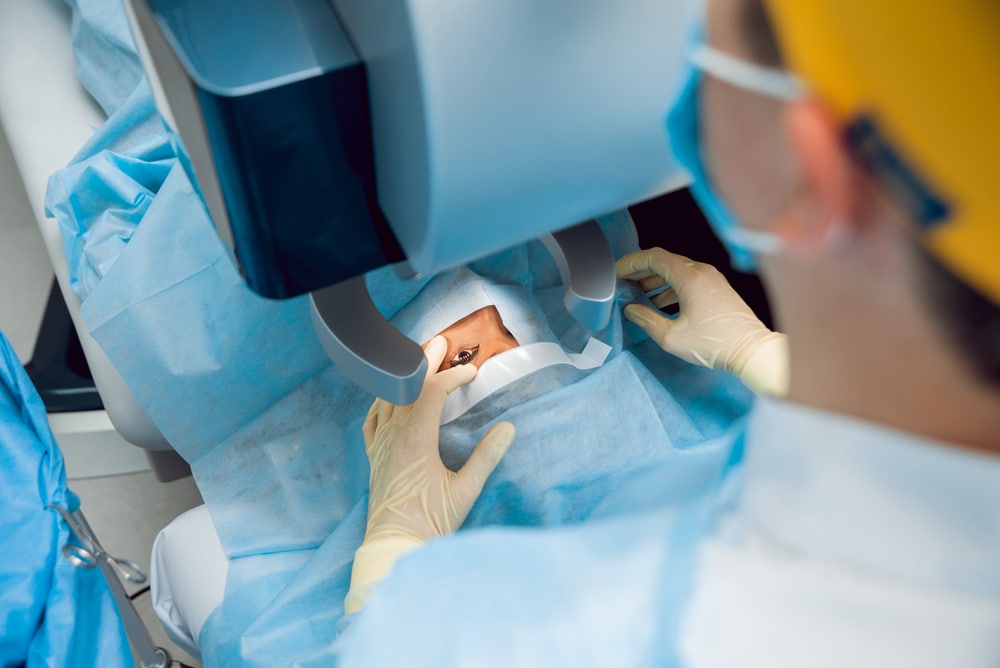


Hearing that you need cataract surgery often comes with an unexpected surprise: you get to help choose the lens that will go inside your eye.
This artificial lens, called an intraocular lens (IOL), replaces your eye’s cloudy natural lens and stays there for the rest of your life. The choice shapes how you see every single day, so it deserves a real conversation with your doctor.
For more than five decades, Kirk Eye Center has been a leading provider of cataract surgery in the Chicagoland area, and our doctors walk every patient through this decision.
Here are seven questions worth asking before you settle on a lens!
1. Which Distances Matter Most to Me Without Glasses?
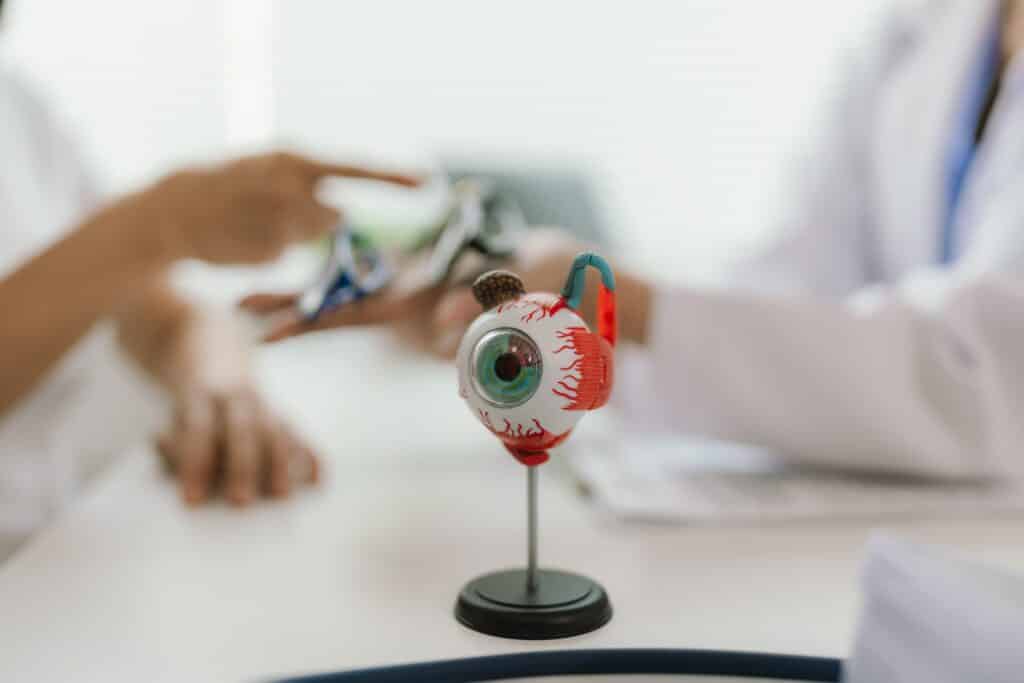
No single lens does everything perfectly, so the first question is about your life and vision goals.
Think about a normal day. Do you spend hours driving, golfing, or watching the action across a room? That is far vision. Do you sit at a computer or squint at price tags in a store? That is intermediate vision. Do you love books, sewing, or scrolling your phone? That is near vision.
Most lenses are built to give you one of these ranges clearly while you wear glasses for the others, though some can cover more than one. Kirk Eye Center offers a range of lens implant options matched to how you actually use your eyes.
Tell your doctor which activities you would most like to do without reaching for glasses. That answer points to the right lens the easiest.
2. Do I Have Astigmatism, and Do I Need a Toric Lens?
Astigmatism simply means the front surface of your eye, the cornea, is shaped more like a football than a basketball. That uneven shape blurs your vision at every distance, not just near or far.
If you have it, a standard lens will not fully clear up the blur on its own. A toric lens has a built-in correction for astigmatism, so it can sharpen your vision the way a regular lens cannot.
Ask your doctor whether your measurements show astigmatism and how much. Even a moderate amount can affect your results, and knowing about it ahead of time lets your doctor plan for it. This question matters no matter which lens style you lean toward, because a toric version can often be paired with the lens type you choose.
3. What Are the Trade-Offs of a Premium Lens?
Premium lenses can reduce how often you reach for glasses, but every lens involves give and take, and a good doctor will tell you so up front. Lenses that provide vision at several distances split incoming light to do their job. For some people, that creates rings of light or starbursts around headlights and lamps at night, often called halos and glare. These tend to fade as your brain adjusts over weeks or months, though a small number of people stay bothered by them.
Patients who do a lot of night driving sometimes prefer a simpler lens for cleaner nighttime vision. Ask your doctor what visual side effects are common with the lens you are considering and how long the adjustment usually takes.
4. Will I Still Need Glasses After Surgery?
This is the question almost everyone wants answered, and the answer depends on the lens.
A standard single-focus lens, called a monofocal, gives crisp vision at one distance, usually far, so you will likely still use reading glasses for close work.
A multifocal lens is designed to give you clear vision at more than one distance, which can cut your need for glasses for many daily tasks.
No lens guarantees you will toss your glasses forever, and your doctor cannot promise that. So it’s important to ask for a realistic picture. With this specific lens, what will I likely see well on my own, and when will I still want glasses? A straight answer here prevents disappointment down the road.
5. Am I a Candidate for a Light Adjustable Lens?
Most lenses are set the moment they go in and cannot be changed afterward. The Light Adjustable Lens is the exception. After your eye heals, your doctor uses gentle light treatments in the office to fine-tune the lens power until your vision lands where you want it. This usually takes two to four short sessions over a week or two. Not everyone is a candidate, and the lens carries an added cost, but for people who want their prescription dialed in after surgery rather than locked in during it, it is worth asking about.
6. Does the Surgical Method Affect My Results?
How your surgery is performed can influence how well your new lens settles into place.
With laser cataract surgery, your surgeon uses a laser to make the openings and soften the cataract, which allows for a more precise, even opening than a hand-held blade can create. That precision helps your new lens sit in the right position, and good positioning matters most with premium lenses meant to reduce your need for glasses.
Ask whether laser-assisted surgery is available and whether it would benefit your particular lens choice. The lens and the method work together, so it is fair to ask how your surgeon plans for both of your eyes.
7. What Will This Cost, and What Does Insurance Cover?
Cost surprises are the kind nobody likes, so bring the topic up early. Insurance and Medicare generally cover standard cataract surgery and a basic monofocal lens, since removing the cataract is considered medically necessary.
Premium lenses that correct astigmatism or give you vision at multiple distances usually come with an out-of-pocket cost, because they go beyond what insurance pays for. Prices vary from lens to lens and from patient to patient based on your needs.
Ask for a clear breakdown: what does my plan cover, what would I pay for each lens option, and is it a one-time cost? Knowing the numbers up front lets you weigh the value of more glasses-free vision against your budget without any pressure.
Choosing a cataract lens is one of the few times in medicine where your daily habits matter as much as your test results. The more openly you talk through these questions with your doctor, the more likely your vision will fit the life you actually live. Our team is glad to take whatever time you need to get the decision right.
Ready to talk through which cataract lens fits your eyes and your life? Schedule a cataract evaluation at Kirk Eye Center at one of our Chicagoland locations.