
By: Tyler Q. Kirk, MD
VOLUME 1 | ISSUE 3
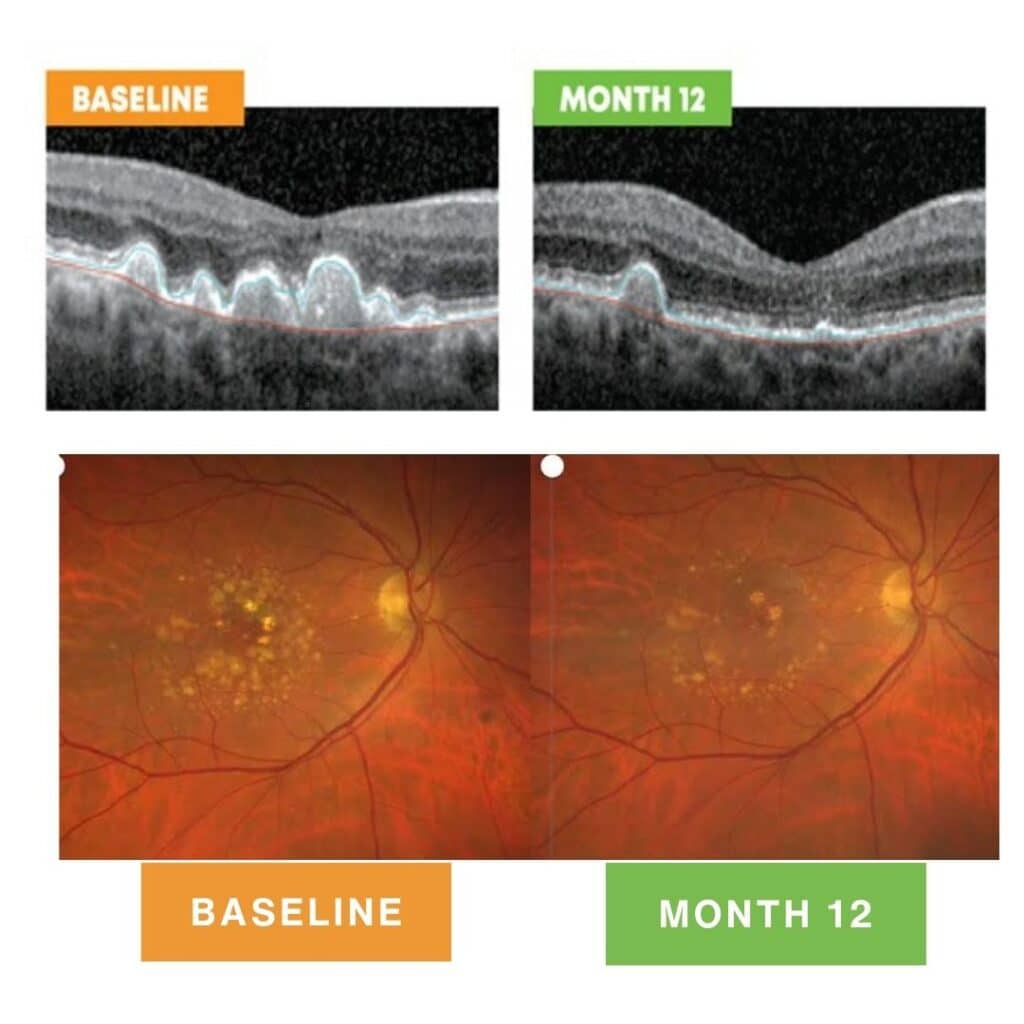
Valeda® Light Therapy is the first FDA-authorized photobiomodulation (PBM) treatment for Dry Age-Related Macular Degeneration (AMD). Using red, yellow, and near-infrared light to stimulate retinal cells, enhances mitochondrial function, promotes cellular repair, and slows disease progression. In the landmark LightSite III trial, patients with moderate dry AMD and best-corrected visual acuity (BCVA) ranging from 20/40 to 20/100 achieved statistically significant vision gains of 5.4 letters at 13 months and 5.9 letters at 24 months—an unprecedented sustained improvement in visual acuity. The study also demonstrated a significant reduction in the development of geographic atrophy, which occurred in only 6.8% of PBM-treated eyes compared to 24% of sham-treated eyes. Valeda has an excellent safety profile, with no phototoxicity or serious device-related adverse events reported. Treatment consists of nine painless 4- to 5-minute light therapy sessions completed over 3 to 5 weeks, with maintenance treatments repeated every 4 to 6 months. Patients are not dilated during treatment visits, and their vision remains unchanged immediately afterward, allowing them to drive themselves to and from appointments. After more than a year of offering Valeda therapy, we are excited to report that our patient outcomes have closely mirrored those seen in the LightSite III trial. Patients are not only maintaining their vision—they are regaining valuable sight and visual function.
Click to View References:
Boyer D, Hu A, Warrow D, et al. LIGHTSITE III: 13-Month Efficacy and Safety Evaluation of Multiwavelength Photobiomodulation in Nonexudative (Dry) Age-Related Macular Degeneration Using the Lumithera Valeda Light Delivery System. Retina. 2024 Mar 1;44(3):487-497.
Burton B, Parodi MB, Jürgens I, et al. LIGHTSITE II Randomized Multicenter Trial: Evaluation of Multiwavelength Photobiomodulation in Non-exudative Age-Related Macular Degeneration. Ophthalmol Ther. 2023 Apr;12(2):953-968.
Markowitz SN, Devenyi RG, Munk MR, et al. A Double-Masked, Randomized, Sham-Controlled, Single-Center Study with Photobiomodulation for the Treatment of Dry Age-Related Macular Degeneration. Retina. 2020 Aug;40(8):1471-1482.
Kaymak H, Munk MR, Tedford SE, et al. Non-Invasive Treatment of Early Diabetic Macular Edema by Multiwavelength Photobiomodulation with the Valeda Light Delivery System. Clin Ophthalmol. 2023 Nov 22;17:3549-3559.
Benlahbib M, Cohen SY, Torrell N, et al.. PHOTOBIOMODULATION THERAPY FOR LARGE SOFT DRUSEN AND DRUSENOID PIGMENT EPITHELIAL DETACHMENT IN AGE-RELATED MACULAR DEGENERATION: A Single-Center Prospective Pilot Study. Retina. 2023 Aug 1;43(8):1246-1254.
Küçükerdönmez C, Tedford SE. Multiwavelength Photobiomodulation Improves Multiple Aspects of Visual Function in Early-Stage Dry Age-Related Macular Degeneration. Ophthalmol Ther. 2025 Aug;14(8):1843-1853.
Ji PX, Pickel L, Berger AR, Sivachandran N. Improvement in Dry Age-Related Macular Degeneration with Photobiomodulation. Case Rep Ophthalmol. 2025 Feb 7;16(1):155-162.
Identifying Patients who may benefit from Valeda® Light Therapy
Patients whose vision ranges from 20/30 to 20/100 may be candidates for Valeda® Light Therapy, particularly those with moderate to severe drusen, confluent drusen, pigment clumping, or areas of retinal atrophy. Patients who are seeking treatment options to help preserve or improve vision before their disease progresses to advanced dry age-related macular degeneration (AMD) should be considered for evaluation. Early intervention may provide an opportunity to support retinal health, maintain visual function, and potentially slow disease progression
Valeda at Kirk Eye Center
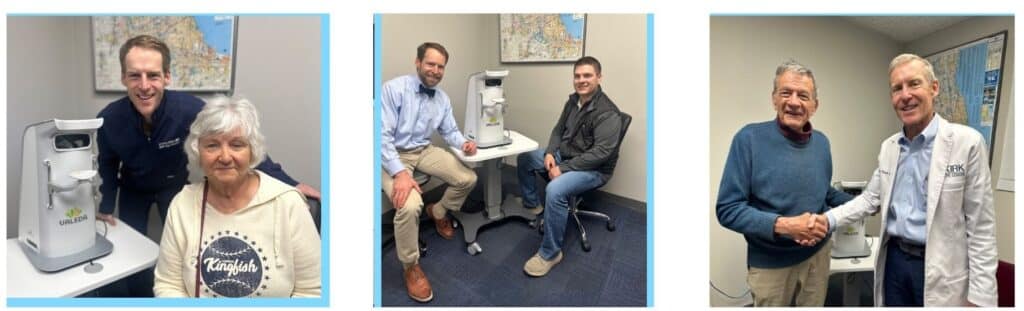
While attending a meeting in the fall of 2025, I first learned about Valeda® Light Therapy and its potential to improve vision for patients with dry age-related macular degeneration. Intrigued by the clinical data and the opportunity to offer a meaningful treatment option, I immediately immersed myself in learning more and worked with the company to bring this innovative technology to our patients. Our Valeda system is conveniently located at our River Forest office, 7427 Lake Street. Kirk Eye Center was proud to be the first practice in Illinois to offer Valeda Photobiomodulation Therapy, and now, with more than a year of experience, we are thrilled to report that our patient outcomes have mirrored those seen in the LightSite III clinical trial. Patients are not only maintaining their vision—they are regaining valuable sight and visual function.
Kirk Eye Center Is Growing
We are excited to announce that in August, our Glen Ellyn practice will relocate to a new, expanded facility at 3800 Highland Avenue, Suite 100, in Downers Grove. This move will more than double our clinic space, provide abundant parking, and offer the convenience of a first-floor location for improved patient accessibility. Dr. Kent Kirk and Dr. Tyler Kirk will continue seeing patients at this new location. We are also thrilled to welcome ophthalmologist Dr. Allison Murchison to Kirk Eye Center. Dr. Murchison will see patients in our new Downers Grove office while continuing to care for patients in her Lemont location, which is now part of Kirk Eye Center as well. To support and strengthen our relationships with local eye care providers, we will not offer optical services at either our Downers Grove or Lemont locations and will continue to rely on our valued optometric colleagues for patients’ eyeglass and contact lens needs.