

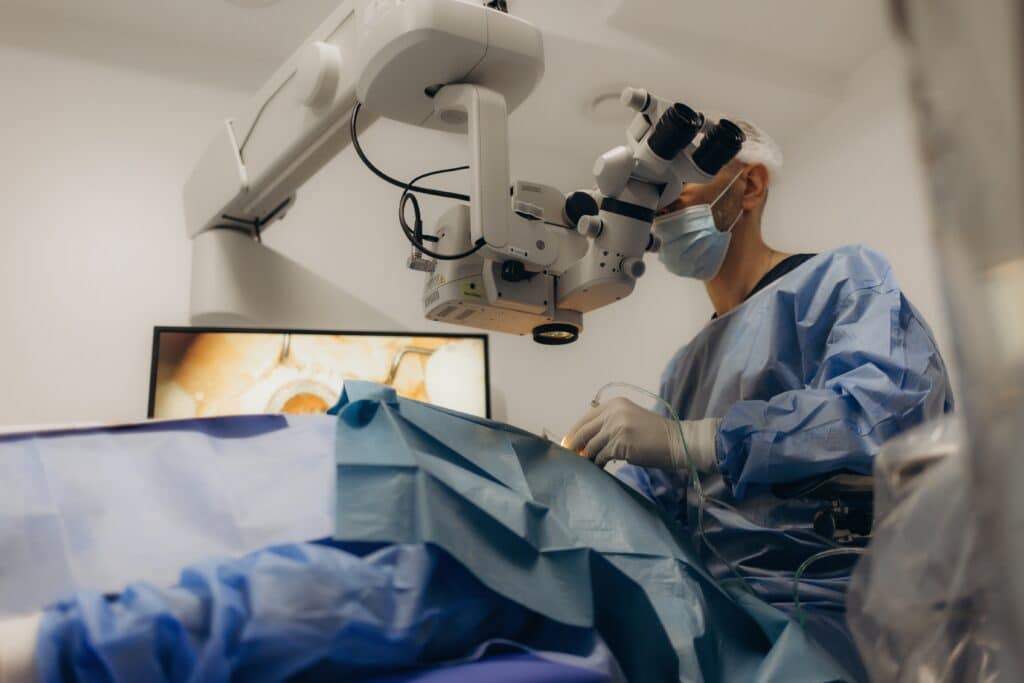
For most of the history of cataract surgery, the artificial lens a surgeon placed in your eye was final the moment it went in. You picked a lens before surgery based on careful measurements, and you lived with the result. If your vision landed slightly off from the target, glasses filled the gap.
The Light Adjustable Lens changes that story, because it lets your surgeon fine-tune your vision after the lens is already in place and your eye has healed.
Here is how it actually works and why the ability to adjust matters so much.
What Makes the Light Adjustable Lens Different?
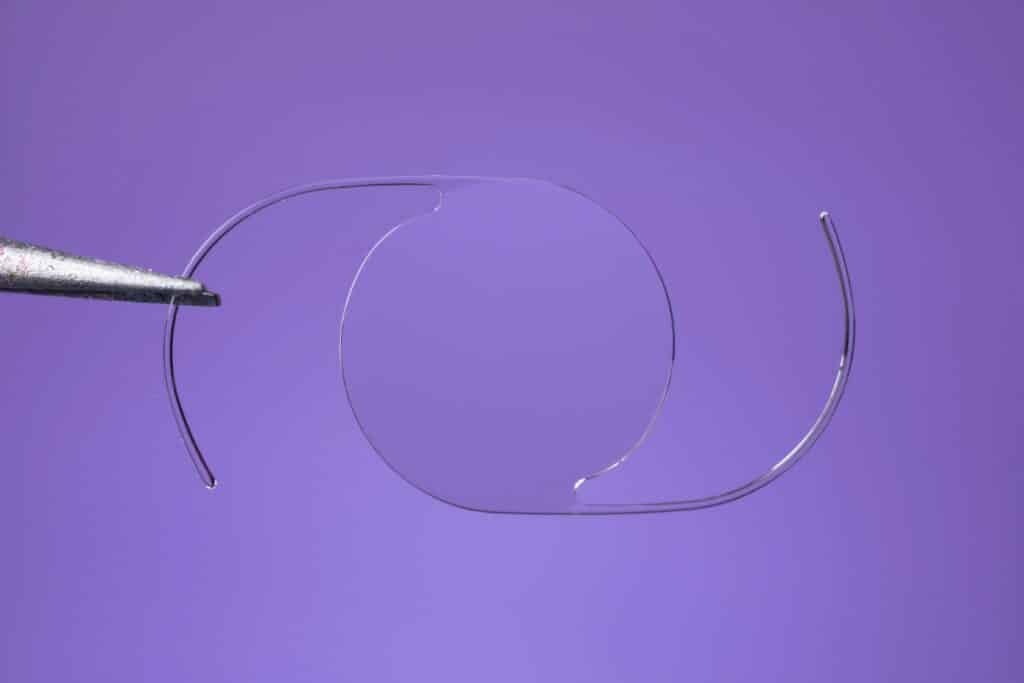
A standard artificial lens, called an intraocular lens or IOL, is chosen from a set of fixed powers. Your surgeon measures your eye, calculates the power most likely to give you sharp vision, and implants it. The math can be excellent and precise, but every eye heals a little differently, and small surprises can leave your final vision slightly nearsighted, farsighted, or affected by astigmatism.
The Light Adjustable Lens is made from a special material that responds to ultraviolet light. After your eye heals from surgery, your doctor can use a specific pattern of UV light on the lens to reshape it in tiny amounts. That reshaping changes the lens power while it sits inside your eye.
Instead of hoping the pre-surgery calculation was perfect, you get to test your vision in the real world first and then dial it in.
Why the Ability to Adjust Matters
The gap between a good result and your best possible result often comes down to a small fraction of a prescription.
With a fixed lens, closing that gap usually means wearing glasses. With an adjustable lens, your surgeon can often close it directly.
This flexibility is especially valuable if you have astigmatism, which is a common condition where the eye is shaped more like a football than a basketball. It blurs vision at all distances and can be tricky to correct precisely with a single fixed lens. The Light Adjustable Lens lets the doctor treat leftover astigmatism during the adjustment process rather than committing to a best guess beforehand.
It also helps people who simply want more say in their outcome. Some patients prefer crisp distance vision and are happy to wear reading glasses. Others want to reduce their need for glasses as much as possible. Because you experience your vision before it is locked in, you can work with your doctor toward the result that fits how you actually live.
The Two Parts of the Process
Getting a Light Adjustable Lens involves two distinct stages: the surgery itself, and the light adjustments that follow.
The Surgery
The cataract removal and lens placement work much like other cataract surgery at Kirk Eye Center.
The surgeon removes your cloudy natural lens and places the Light Adjustable Lens in its spot. Many patients choose to combine this with a laser-assisted approach, and laser precision can pair particularly well with a lens designed for precise results.
The surgery is quick, and most people go home the same day. At this point, your vision will start to clear, but the lens is not finished. It is waiting for the light treatments that customize it.
The Light Treatments
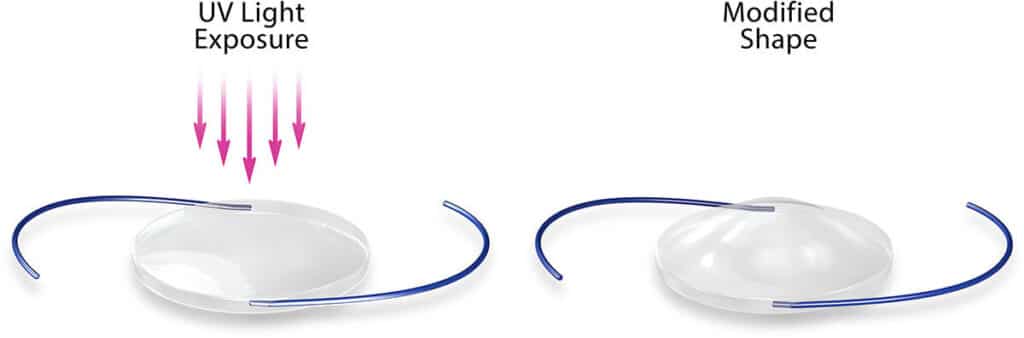
About two to three weeks after surgery, once your eye has healed, you return for the first adjustment. Your doctor checks your vision, decides what change would sharpen it, and delivers a painless pattern of UV light to the lens for roughly a minute or two. Most people don’t feel anything during the treatment itself.
You typically need three to four of these sessions, spaced a few days apart. Each one refines your vision a little more. When you and your doctor agree that your vision is where you want it, a final light treatment locks the lens so it will no longer change. That last step is important, because it means everyday light will not alter your results afterward.
What You Need to Commit To When Choosing the LAL
The results depend on following the plan closely, and there is one requirement that can be a significant commitment for some patients.
Until your lens is locked in, you must wear the protective UV-blocking glasses your doctor gives you whenever you are around sunlight or bright indoor light. Because the lens responds to UV light by design, unprotected exposure could change it in ways you did not intend.
That means wearing the glasses consistently, including for tasks like driving or sitting near a window, for the few weeks of the adjustment period. It is a short-term commitment for a long-term payoff, but it does ask more of you than a standard lens does.
How to Know if the Light Adjustable Lens is Right for You
This technology can be a great option for people who want a high degree of accuracy and are willing to attend the follow-up adjustment visits. It can be a strong choice if you have astigmatism, if you have had previous refractive surgery like LASIK that makes lens calculations harder, or if you simply want the chance to test and refine your vision rather than accept a single fixed outcome.
It may not be the best fit if you cannot commit to the adjustment schedule or reliably wear the protective glasses during that window. Comparing it against other choices is worth doing, and reviewing the full range of lens implant options helps you weigh the trade-offs.
The right lens for you depends on your eyes, your daily activities, and your goals. An evaluation with an experienced surgeon is the only way to know for sure whether the Light Adjustable Lens matches what you need.
Curious whether a Light Adjustable Lens could give you the customized vision you want after cataract surgery? Schedule an appointment at Kirk Eye Center at one of our Chicagoland locations.