

VOLUME 1 – ISSUE 6
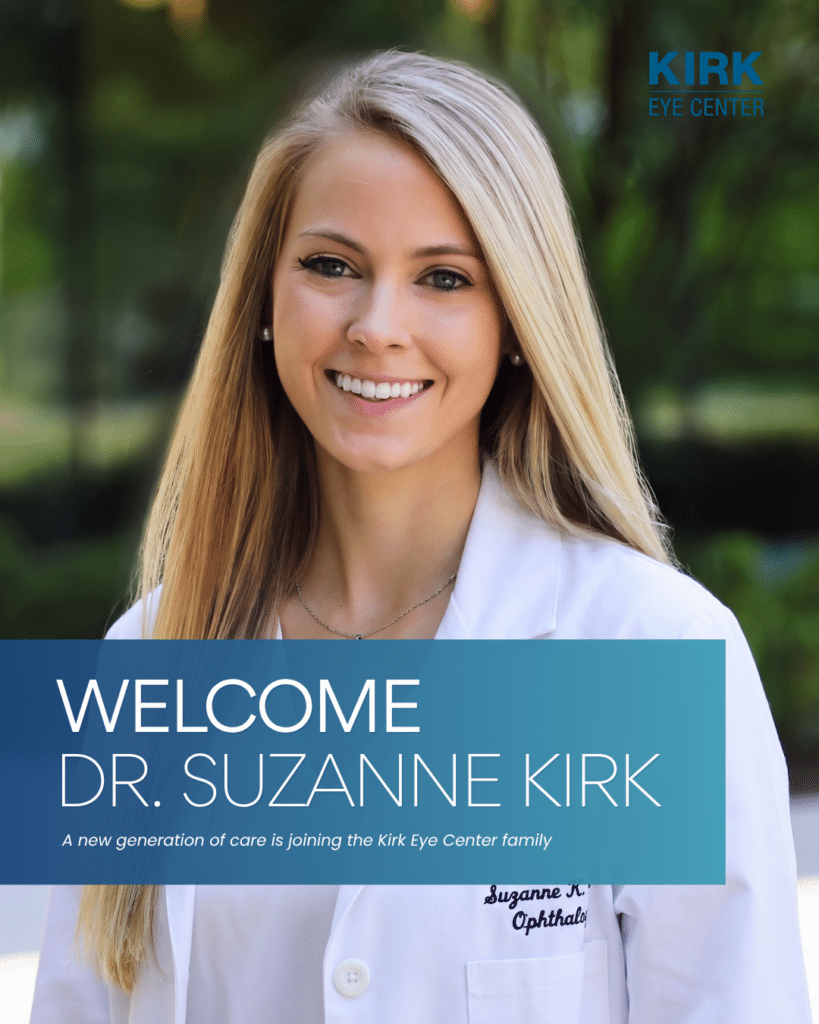
Following in the footsteps of her family’s longstanding commitment to ophthalmology, Dr. Kirk’s early exposure to the precision and intricacy of ophthalmic surgery shaped her decision to pursue a career in ophthalmology. Having witnessed from a young age the impact vision can have on a patient’s quality of life, she is dedicated to providing high-quality, personalized, compassionate care for every patient.
Dr. Kirk served as Chief Resident at Loyola University Medical Center before completing her fellowship in Cataract and Refractive Surgery at the Cleveland Eye Clinic.
Dr. Kirk was drawn to cataract and refractive surgery because it combines two things she has always loved about ophthalmology: the ability to make an immediate, tangible difference in a patient’s life and the opportunity to work at the forefront of surgical innovation.
What Dr. Kirk finds especially rewarding is that she isn’t simply treating a disease or removing a cataract. She is helping patients regain independence, improve their quality of life, and, in many cases, experience vision in a way they haven’t in years. She is enthusiastic about the highly individualized nature of refractive surgery. Every patient’s eyes, visual goals, and lifestyle are different, which makes thoughtful surgical planning and patient education such an important part of what she does.
Ultimately, Dr. Kirk is passionate about cataract and refractive surgery because it is a field that continually challenges her to grow, combines the science and art of surgery, and allows her to build meaningful relationships with patients while making a lasting impact on how they see the world.
In Dr. Suzanne Kirk’s free time, she enjoys baking sourdough bread, running half-marathons, practicing Pilates, scuba diving, spending quality time with her Cavapoo puppy, and traveling the world with her husband.
Dr. Suzanne Kirk Brings a New Procedure to Kirk Eye Center
CTAK (Corneal Tissue Addition Keratoplasty) is an innovative procedure designed to improve vision in patients with keratoconus. By adding a small amount of donor corneal tissue, the cornea can be reshaped to create a more regular surface. This can allow for improved vision when wearing glasses or contact lenses. Vision without glasses or contact lenses will generally remain about the same.
CTAK does not replace corneal crosslinking, which should be performed in all patients with keratoconus.
Who is the ideal candidate for CTAK?
- Best-corrected vision in glasses or contact lenses must be worse than 20/40.
- No apical scarring on examination.
- Corneal thickness must be greater than 400 µm.
- Patients should understand that CTAK will not improve uncorrected vision. It is intended to improve vision with glasses or contact lenses.
Whether you have a patient interested in reducing dependence on glasses, a contact lens wearer exploring alternatives, or a cataract patient who may benefit from premium lens technology, our team is here to help evaluate their options.