

LASIK has long been the go-to option for greater visual freedom, and it remains an excellent procedure for the right candidates. But a growing number of patients are choosing a different path, one that doesn’t involve reshaping the cornea at all.
EVO ICL is an FDA-approved implantable lens that corrects nearsightedness by adding a precise optical element inside the eye, rather than removing tissue from the surface. Keep reading to learn more about EVO ICL and how it compares to LASIK!
How EVO ICL Works
EVO ICL stands for Implantable Collamer Lens. Collamer is a biocompatible material, meaning it coexists naturally with the eye’s own tissues without causing irritation or inflammation.
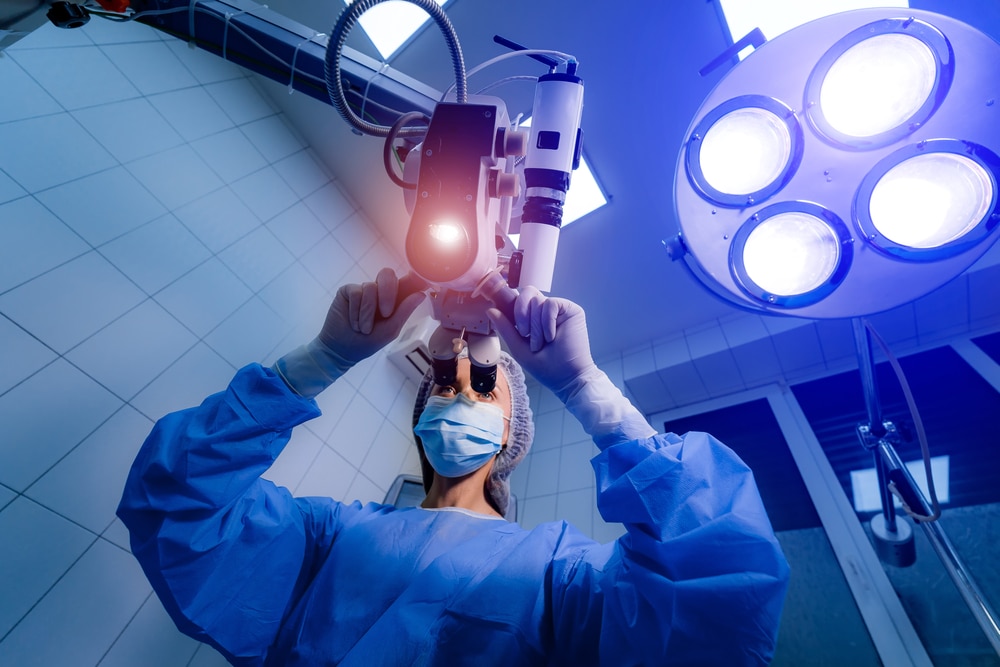
During the procedure, a tiny incision is made at the edge of the cornea, and the lens is gently folded and inserted into the space just in front of the natural lens. Once in place, it unfolds and sits behind the iris, where it’s invisible to others.
The procedure typically takes around 15 minutes per eye and is performed with numbing eye drops, not injections. Most patients notice a significant improvement in vision almost immediately.
A follow-up visit the next day allows your surgeon to confirm that everything has settled correctly, and from there, most patients return to their normal routines quickly. There’s no flap, no laser applied to the cornea, and no corneal tissue removed. The lens does its work without altering the underlying structure of the eye.
How Does EVO ICL Compare to LASIK?
Both procedures correct nearsightedness effectively, and both have strong satisfaction rates among patients who are good candidates. The difference comes down to how they work and who they work best for.
LASIK surgery corrects vision by using a laser to reshape the cornea, permanently changing its curvature so that light focuses correctly on the retina. It’s a well-established procedure with decades of data behind it, and for patients with sufficient corneal thickness, stable prescriptions, and healthy tear production, it delivers excellent results.
EVO ICL takes a different approach. Rather than modifying the cornea, it adds a corrective lens inside the eye. Nothing is removed. The cornea stays exactly as it is. For many patients, that distinction matters quite a bit, particularly those with thinner corneas, higher prescriptions, or eyes that aren’t well-suited to laser treatment.
At Kirk Eye Center, every patient goes through a thorough evaluation to determine which option aligns with their individual anatomy and visual goals.
Who Is a Good Candidate for EVO ICL?

EVO ICL was designed in part to serve patients who want freedom from glasses and contacts but don’t qualify for laser vision correction. That group is larger than many people realize.
People who are not good candidates for LASIK include those with thin corneas, high levels of myopia, and certain conditions that affect the stability or surface of the eye. Dry eye syndrome is one of the more common reasons patients are turned away from LASIK, since the procedure can reduce tear production and worsen symptoms. EVO ICL does not carry the same risk. Because the cornea isn’t touched during the procedure, patients with mild to moderate dry eye are often good candidates.
Good candidates for EVO ICL are generally between the ages of 21 and 45, have had a stable prescription for at least a year, and have an anterior chamber depth sufficient to accommodate the lens. A comprehensive evaluation at Kirk Eye Center will confirm whether EVO ICL is appropriate for your specific eyes.
Key Reasons Patients Are Choosing It Over LASIK
For patients who qualify for both procedures, the decision often comes down to a few specific advantages that EVO ICL offers.
The lens is reversible. If your prescription changes significantly over time, or if you simply want the lens removed for any reason, it can be taken out or exchanged. No permanent changes have been made to your cornea, so there is nothing to undo. This gives some patients a meaningful sense of security that a permanent corneal procedure doesn’t offer.
EVO ICL also provides built-in UV protection. The collamer material filters ultraviolet light, an added benefit that LASIK and PRK do not include. For patients who spend time outdoors, that’s a practical advantage beyond just vision clarity.
Because no corneal tissue is removed, there’s no risk of the corneal flap complications that can occasionally occur with LASIK. Some patients who have been told their corneas are slightly too thin for LASIK find that EVO ICL gives them a safe and effective alternative. And for patients with very high prescriptions, EVO ICL tends to produce sharper, higher-quality vision than a laser procedure applied to the extreme end of its range.
Taken together, these factors explain why EVO ICL has seen a steady rise in interest among both patients and surgeons over the past several years.
What to Expect at Your Consultation

Kirk Eye Center’s modern vision correction evaluation is designed to match each patient with the procedure that fits them best, whether that’s LASIK, EVO ICL, PRK, or refractive lens exchange. No two eyes are identical, and no single procedure is right for everyone.
During your consultation, your surgeon will measure corneal thickness and curvature, evaluate your prescription and its stability, assess the health of your tear film, and examine the internal dimensions of the eye to confirm that an implantable lens would fit correctly. You’ll have time to ask questions and discuss your lifestyle, visual goals, and any concerns you have about the procedure.
Patients who have been told they’re not LASIK candidates often leave their EVO ICL consultation with options they didn’t expect. And patients who could qualify for either procedure often find that a side-by-side comparison helps them feel genuinely confident in their choice.
Wondering if EVO ICL or LASIK is the right choice for your vision? Schedule an appointment at Kirk Eye Center at one of our Chicagoland locations.