


Your central vision depends on a tiny area at the back of your eye called the macula. When this area begins to deteriorate, it causes age-related macular degeneration, a condition that can make everyday activities like reading and driving more difficult.
What many people don’t realize is that AMD comes in two forms, wet and dry, and they behave very differently. Knowing which type you’re dealing with is the first step in protecting your eyesight.
Keep reading to learn more about the differences between wet and dry macular degeneration!
What Is Age-Related Macular Degeneration?
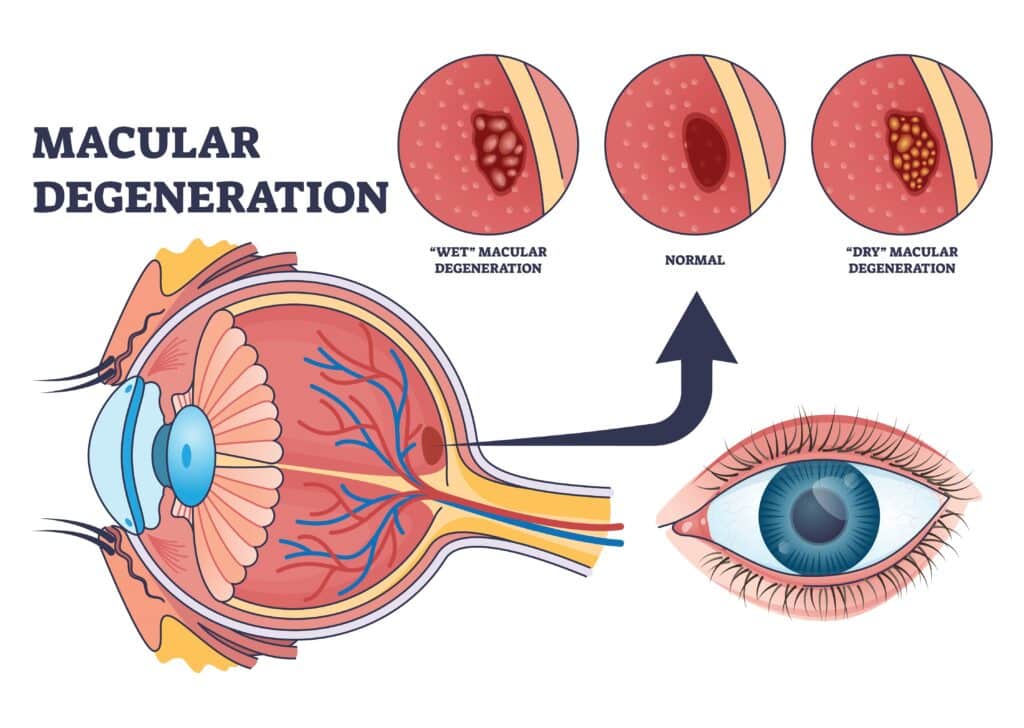
To understand macular degeneration, you first need to know about a small but vital part of your eye called the macula.
The macula sits in the center of your retina and is responsible for your sharp, central vision. This is the vision you use when reading, driving, recognizing faces, and seeing fine details. When you have AMD, the macula begins to break down and no longer works as it should.
Age-related macular degeneration develops in two primary forms: dry AMD and wet AMD. While both types affect the same part of your eye, they develop differently, progress at different rates, and require different approaches to treatment.
At Kirk Eye Center, our eye care team uses advanced diagnostic technology to identify which type of AMD you have and create a personalized plan to preserve your vision for as long as possible.
Dry Macular Degeneration
Dry AMD is the more common form of the condition. This type develops when small yellow deposits called drusen begin to accumulate under your retina.
Think of drusen as waste products that your eye can no longer clear away efficiently. As these deposits build up over time, they cause the cells in your macula to thin and eventually die.

Dry macular degeneration typically progresses through three stages. In the early stage, you might have a few small drusen with no noticeable vision changes. The intermediate stage brings larger drusen and some mild vision loss, though many people still function normally in their daily activities.
Advanced dry AMD, sometimes called geographic atrophy, occurs when significant areas of your macula have deteriorated, leading to more serious vision loss.
Dry AMD typically progresses slowly. Vision changes develop gradually over months or even years. Some people develop a blurry spot in the center of their vision that slowly expands.
Because these changes happen so slowly, many people adapt without realizing how much their vision has declined.
Wet Macular Degeneration
Wet AMD is less common, but it’s responsible for the majority of severe vision loss from the disease. This form develops when abnormal blood vessels begin growing underneath your retina. These new blood vessels are fragile and poorly formed, which means they leak fluid and blood into your macula.
When fluid accumulates in or under the macula, it causes the retinal tissue to lift and swell. This distorts your vision quickly and can lead to scarring if left untreated.
The scarring permanently damages the light-sensitive cells in your macula, resulting in lasting vision loss. Wet AMD can develop on its own, but more commonly it occurs as a progression from dry AMD. Even if you have dry AMD in both eyes, wet AMD might only affect one eye.
With wet AMD, straight lines may suddenly appear wavy or bent, a symptom called metamorphopsia. You might see a dark or blank spot in your central vision that wasn’t there before. These changes can happen rapidly and require immediate attention to prevent permanent vision loss.
How is Macular Degeneration Treated?
Dry AMD

For dry AMD, treatment focuses on slowing progression and protecting the vision you still have.
Studies have shown that a specific combination of vitamins and minerals, known as the AREDS2 formula, can reduce the risk of dry AMD advancing to late stages. These supplements include vitamin C, vitamin E, zinc, copper, lutein, and zeaxanthin. Your eye doctor can tell you whether these supplements are right for you based on the stage of your condition.
Lifestyle changes also play a role in managing dry AMD. Not smoking is one of the most effective things you can do to slow progression. Eating a diet rich in leafy greens and fish, maintaining a healthy weight, and protecting your eyes from UV light can all help preserve your vision. Regular monitoring with your eye care team allows them to catch any progression early.
Kirk Eye Center is proud to be the first practice in Illinois to offer Valeda light therapy for dry AMD. This innovative, non-invasive treatment uses specific wavelengths of light to stimulate cellular function in the retina and may help slow disease progression. Your eye doctor can discuss whether Valeda therapy is appropriate for your specific situation.
Wet AMD
Wet AMD requires more aggressive treatment. The most common and effective approach involves injections of medications called anti-VEGF drugs directly into your eye.
These medications stop the growth of abnormal blood vessels and reduce fluid leakage. While the idea of an eye injection might sound uncomfortable, the procedure is quick and performed with numbing drops. Many patients experience stabilized vision or even improvement with these treatments.
The key to successful wet AMD treatment is starting as soon as possible after symptoms begin. The longer fluid and blood leak into your macula, the more damage occurs and the less likely treatment will restore lost vision. Regular follow-up visits are necessary because wet AMD is a chronic condition that requires ongoing management.
Protecting Your Vision from Macular Degeneration
While both forms can affect your central vision, their different progressions and treatment options mean that early, accurate diagnosis makes a real difference in outcomes. Whether you’re experiencing symptoms or simply want to be proactive about your eye health as you age, regular comprehensive eye exams are your best defense.
If you’re noticing changes in your central vision, difficulty reading, or distorted lines, don’t wait to have your eyes examined. Schedule a comprehensive eye exam at Kirk Eye Center at one of our convenient Chicagoland locations discuss strategies for protecting your vision.